RSS

3 tips on how to declutter your stress provoking areas

Living in a decluttered home will definitely improve your life. Here are some tips on how to do it free and easy!

Start small and stay consistent
Start with one closet or area and get it completely decluttered. Chances are acknowledging your accomplishments will give you the energy to tackle your next area. In no time you will have a clutter free oasis and an improved lifestyle.

Have a sorting method
Sometimes we ruminate too much over what to keep, toss and donate. Don’t get bogged down into too much time spent wondering what you want to keep. Here is an effective rule of thumb that will help you make decisions quickly: keep the items that you have used in the last three months and items you consider heirlooms or keepsakes. Tackle each area by placing each item in your hands and ask yourself these simple questions, “Do I still use this item? Is this item an heirloom or keepsake? Is the item in usable condition? Would someone else use this item?” Keep all items you still use and value. Toss items that are unusable, soiled or broken. Donate all good condition items you do not use. Once you have mastered this sorting method, you will be shocked how easy it is to get your spaces clean and organized.

Donate
Once you have returned all your usable items, keepsakes, and heirlooms back to their storage areas, it’s time to donate. If you haven’t already, simply put all these items in sealed cardboard box or bag and label “Donation”. Some organizations like Diabetes Canada will pick up clothing & small household items donations free of charge. All you have to do is schedule a pickup. It is that easy! Improving our lives and the lives of our family, friends and community is a worthwhile and joyful journey. Start your journey today!

Read

Is this a Buyer's or Seller's market?

If you’re thinking about buying or selling a home today, no doubt you’re wondering one of two things: Is this a good time to buy? Or, is this a good time to sell? 

While it’s important to note that real estate prices and market conditions are influenced by a variety of factors including location, type, condition, interest rates, consumer confidence, unemployment rates, deficits, population growth and affordability – the most used predictor is the law of supply and demand.

Here are 3 types of real estate markets that use the principles of supply and demand to predict success for buyers or sellers.

1.   A Buyer’s Market.  A buyer’s market is when there are more homes for sale (supply) than there are buyers (demand) for them. In this type of market, buyers have the advantage with more inventory to choose from, prices remain stable or sometime soften with sellers more open to negotiating.

2.   A Seller’s Market.  A seller’s market is when there are more buyers (demand) than there are current homes for sale (supply). In a strong seller’s market, sellers are in the driver’s seat. Prices strengthen or increase; homes sell quicker, and, in some cases, sellers get multiple offers.

3.   A balanced market is when there are equal number of buyers and sellers in the market. Homes sell in a reasonable time frame and prices remain stable. This is a healthy real estate market, one that is good for both buyers and sellers.

For more information on what market type we’re in right now, just reach out; I’m always happy to help!

Read

6 reasons why decluttering improves your life

When you hear the word “declutter” do you immediately think about all the time it would take and the aggravation it would cause to get rid of all the stuff that’s cluttering your house? Is your next instinct to close the closet doors and run for the hills? We get it, these reactions are 100% human. The question people are asking themselves is, “will the effort be worth it?” You better believe it is, and in fact experts say that it will not only improve your closet space, it will also improve your entire life.

Let’s take a look at six reasons why your life will improve when you make up your mind that now is the time to declutter.

#1 - Decluttered Living Is Peaceful Living
Reducing aggravating clutter that causes frustration will allow you to find what you need and use daily, quickly and easily.

#2 - Decluttering Reduces Stress and Increases Self-Esteem
Anxiety can rise when we open a messy closet door or take a look in our garages. Science has shown that unnecessary stress and anxiety can lead to unforeseen health issues. Life is stressful enough; our homes need to be calm and peaceful places for us to recharge.

#3 - Decluttering = Donating = A Better Life
For All One of the main reasons why our lives become over cluttered is we have been taught not to be wasteful and throw good things away. Another reason is we just do not know what to do with all that stuff. A good answer to both is donating. Developing the habit of donating not only improves your life but will improve the lives of our community members.

#4 - Positive Habits Lead to a Happier Life
Nothing makes us feel better about ourselves and our lives than breaking a negative habit and establishing positive ones. Since all aspects of improving your life is an ongoing journey, think of living in a clutter free environment in the same way. Trading out storage boxes filled with stuff you do not use for Toss and Donate boxes means you will build your positive habit of ongoing decluttering.

#5 - Clutter Free is Accident Free
It is hard to fully enjoy our home life if boxes tumble down from shelves or we stub toes walking down hallways. When clutter takes over, we find ourselves buying more boxes, adding more shelves, and storing stuff up and out into what should be living space. Don’t wait until a box falls on your head to start your decluttering habit. Put safety first!

#6 - Save Time and Money for the Fun Stuff in Life
Less stuff means more time enjoying life. We can find ourselves in the trap of spending time and money on stuff we do not need, over heading off on an adventure or participating in a family event. Less stuff also means you can get rid of your expensive storage solutions. Whether its additional storage boxes, sheds or storage units — that precious money could be used to enhance your life.

Improving our lives and the lives of our family, friends and community is a worthwhile and joyful journey. Start your journey today!

Read

Choosing the Right Ceiling Light Fixture

I always say this: updating your light fixtures is one of the best ways to make sure your home makes a positive first impression. Keep in mind, the light fixture must be the right proportion for the room. How does one make sure of that? Well, there are some general rules.

Rule #1: the size of your ceiling fixture should be equal to the sum of the room size.

Say what???

For example, if your dining room is 12 feet by 12 feet, the width/diameter of your fixture should be around 24 inches, to produce a good visual effect.

In a foyer with extra high ceilings, the fixture can be 2-3 inches larger to compensate for the fact that the height will make it look smaller.

Rule #2: With standard 8 or 9-foot ceilings, stick to a flush mounted fixture. If your foyer is 2-storey high, you can definitely go with a hanging chandelier… which brings me to the next topic: how high/low should you hang your light fixtures?

In a foyer, the bottom of your fixture should hang at least 8 feet above the floor or even higher if you have 2-storey ceilings or if there is a large window above the entry door. In the latter case, make sure the chandelier is vertically centered in the window so it can be seen in its entirety from the outside of your home.

In your dining room, the bottom of the chandelier should hang 30-36 inches above your table. You can play within that range, depending on how tall your chandelier is.

Don’t forget to make sure that the style of fixtures you choose remains consistent throughout and matches the overall feel of your home. A crystal chandelier might look out of place in a chalet style home.

Read

How to value your home renovations

If you plan to update your home with a significant renovation, be sure you are investing in the right upgrades. There is an assumption that the money you invest in a renovation will be fully returned to you if you sell the property. That is not always the case. 

Payback on renovations is measured three ways:

1. The value of increasing the selling price of your property
2. The value of enjoying the renovated space
3. The value of maintaining the worth of your property

To yield the highest return on your investment, make sure the quality of the materials & workmanship are consistent with other homes in the area and that the renovation blends in with the overall style and design of your home. You certainly don’t want to over-improve. 

Here are the top 5 renos with the highest return on investment:

  • Kitchen

  • Bathroom

  • Repainting Interior / Exterior - completed in tones that will appeal to a wide-range of buyers 

  • Updating De´cor - lighting and plumbing fixtures, replacing worn flooring or refinishing hardwood floors 

  • Decluttering - removing all excess items to showcase the features of your home 


How much you spend on improvements should depend, in part, on how long you plan to live in your home. And if you spend thousands of dollars on a unique custom designed feature that may not appeal to most, you may not even recover a portion of your investment. So consider your selling timeline before you create a space that only you will enjoy.

The top 5 renos with highest enjoyment value are:

• Basement finishing
• Garages
• Sun rooms / Additions
• Decks / Fences
• Landscaping 
 

Most buyers don’t want to find out during their home inspection that they’ll have to spend tons of money on big-ticket items. Always better to keep your home in good condition to maximize your chance of getting top dollars when you decide to sell.  ?Replacing those big-ticket items as they near the end of their life expectancy is essential. 

Top 5 renos to maintain worth:

• Replacing the roofing
• Updating the heating / cooling system
• Replacing windows & doors
• Updating electrical (panel, wiring, sockets, fixtures) 
• Repairing structural defects 


As a real estate expert, I can provide an objective perspective before you start your renos.  Reach out anytime, I'd love to help you plan your next one!

Read

How important are good listing photos

There are two trends impacting real estate photography that you should know about if you’re thinking of selling this year. 

First, more than ever before, buyers are relying on pictures to decide whether or not to schedule a viewing. They expect to be able to go online and “tour” your home via the photography. If they don’t form a good impression of your home from the pictures, they may quickly lose interest in your listing. 
Second, everyone is a photographer these days! Most people have phones with cameras, and many think they can take a decent picture. 

Unfortunately, taking a “decent picture” isn’t good enough. Your listing photos need to accomplish a lot. They must: 

  • Give buyers the information they need: room sizes, layout, views, property details, etc; 

  • Showcase the most enticing features of your home; 

  • Communicate the functionality, spaciousness and style of each room; 

  • Provide a sense of what it’s going to be like to live there ; and, much more. 

In short, listing photos need to help sell your property. When you consider that these pictures are often the first look-see buyers get of your home, you can appreciate how important they are. 

So, don’t leave listing photos to chance. There is an art and science to taking them. 

Think of it this way. If better listing photos encourage just five percent more buyers to schedule a viewing, that could result in a faster sale at a higher price. 

By the way, I’m well-versed in the best practices of taking great listing photos. Call me for more information.

Read

Where has all the housing supply gone

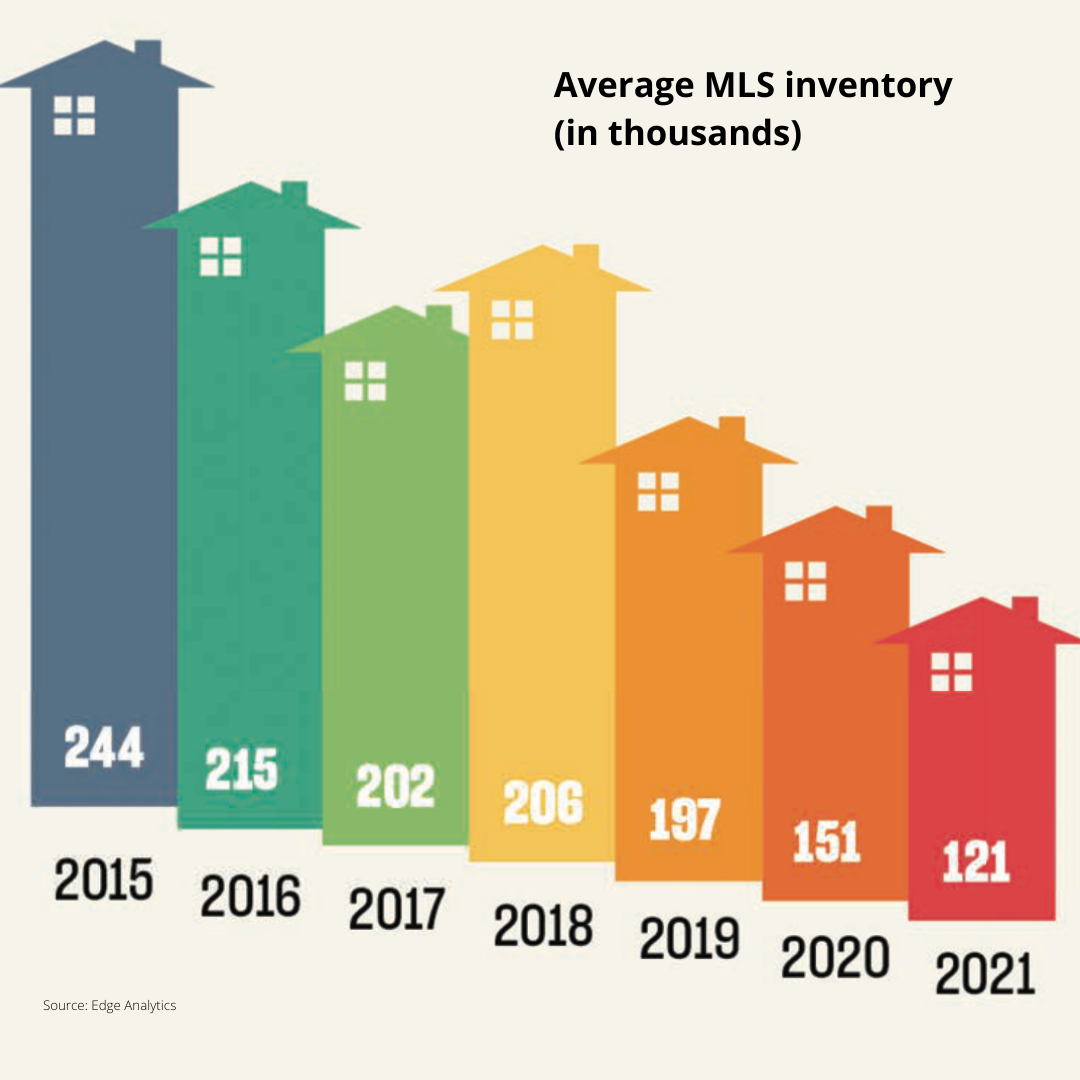
If you've been house-hunting this year, you may have noticed that it's been slim pickings for listings on the MLS. 

House listings across the country have been steadily declining for 6 years and are now less than half what they were in 2015:

How did we get there? From the 1970s through to the 2010s, Canada grew by an average of 3.1 million people and built on average 1.3 million new single-family homes each decade.

But then in the 2010s, population growth surged to 4 million but new homes built fell to less than 1.1 million:

Unfortunately for prospective buyers, this shortage of single-family homes may persist until we see a substantial increase in construction activity.

If you want to discuss, reach out anytime, always happy to chat.

Read

5 Tips for Preparing for an Early-in-the-Year Sale

There are numerous reasons why you might need to sell early in the year. Perhaps you even need to sell this month! Whatever your reasons, preparation is key. Make the right moves now and your sale is likely to go smoothly and successfully. 

Follow these tips: 

1.    Make a list of what needs to be done around the property to prepare it for listing. That includes decluttering, cleaning, getting needed repairs done, and so forth. 

2.    Schedule those tasks. On a calendar or planner, block out ample time to do everything on your list. Give yourself a time buffer because things can often take longer to do than expected. 

3.    Get help.  You don’t need to do everything yourself.  Consider hiring a painter, contractor, cleaning service, and other professionals. Outsourcing can reduce a lot of the stress of selling while ensuring your property is prepared in time. 

4.    Dispose of unwanted items that may  have accumulated over the years in the garage, basement, and closets. You can have a yard sale, sell stuff online, donate items to charity, or take them to your local recycling centre. 

5.    Free up your schedule during the period you expect your property to be on the market. You want your home to be accessible for showings as often as possible, giving prospective buyers a lot of flexibility when scheduling. 

The idea is to get your property as “sales-ready” as possible — as early in the year as possible. That way, when it comes time to list your home, you won’t have to scramble to get it ready. The hard work will be done and you’ll be able to focus on selling your property quickly and for the best price. 

Want more tips on preparing your home for sale? Call today. 

Read

6 Easy-to-Forget Things to Do before a Buyer Viewing

When you have a buyer coming to view your property, you want to make the best impression possible. So, you do the usual things. You clean, tidy and declutter. However, some details are easy to forget. For example: 

  1. Is there a mat by the front door for shoes, umbrellas, etc.? 

  2. Did you air out the home as much as possible to get rid of any lingering odours from a pet, recent cooking, etc.? 

  3. Did you empty trash bins? 

  4. Is the buyer (or his or her agent) aware of any doors that may have special locking mechanisms? If so, leave a note with instructions. For example, “To open the patio door, pull up the deadbolt lock at the bottom.” 

  5. Are there any kids’ toys on the floor that might accidently get damaged or be a tripping hazard

  6. Did you make arrangements for pets? If you must leave a pet home during the viewing, leave a note with any necessary instructions, such as, “Please don’t let the cat out.”

The better your home shows to buyers, the more likely you are to get an offer.

Read

Getting family members on the same page

Remember the last time you had a family discussion about what to have for dinner? Chances are, there were some disagreements! In fact, it might have been agonizing trying to get everyone to settle on the same dish. Now imagine getting everyone to agree on what type of home to buy!

Obviously, you want family members to be in harmony when looking for a new home. The more everyone is on the same page, the smoother the process will be.

Here are some tips worth trying:

Make a list. Have everyone list the top three features they want in a new home. You might find that family members are closer to agreement than you thought. Also, family members will likely not be disappointed if they get two out of the three features they want.

Have a family meeting. Set a goal to have a clear profile of the kind of home you want by the end of the meeting. Be prepared for some lively discussion, but also be firm that a decision needs to be made.

Be understanding. If a family member insists on a particular feature, ask why. It might be trivial, such as having a shopping mall within walking distance when driving or taking transit is relatively easy. On the other hand, the desired feature might be something truly important and worth considering.

Manage expectations. Explain that not everyone will get what they want and that you (or you and your significant other) will do your best to accommodate everyone’s wishes. There’s no perfect solution.

Depending on your family, it might be difficult to make sure everyone is happy with the home you end up buying. However, by using these tips you can ensure that everyone will at least feel they’ve been heard. Then, once you start building memories in your new place, everyone will start to feel like it’s home!

Read

Buying a home out-of-town

Have you ever considered selling your home and moving out-of-town? One concern that might be holding you back is the uncertainty involved in finding a home in an unfamiliar place. What are the best neighbourhoods? What are homes selling for in that area? What is it like to live there?

There are many ways to find out.

- If possible, spend a day in the area. Walk some of the neighbourhoods. Visit schools and parks. Check out the local shopping and other amenities.

- Talk to someone who lives there. This will give you firsthand insights into the area. You can facilitate this through a Facebook post where you ask to chat with a local resident.

- View current listings in the area online. Most listings include helpful data on safety, demographics and other information.

- Get a handle on home prices by finding out what a home like yours is currently selling for in that area. That will give you a baseline to determine what you can expect to pay.

What’s the bottom line? There’s no need to let uncertainty about finding a home in a different town or city hold you back.

Read

Managing home insurance

Home insurance seems to be getting costlier every year, with basic premiums continuing to rise as more homes are exposed to added risks attributed to extreme weather events, accidents, vandalism, and outright theft.

This leaves homeowners in a difficult situation, but there are things that can be done to help ease rising costs.

First, examine your current policy and talk to your agent/broker about your coverage and premiums. You might, for example, agree to increase your deductible to decrease premiums. Meanwhile, you may also be eligible for discounts, based on client profiles such as bundled policies (e.g., auto & home), claims history, and payment punctuality.

Other discounts may be available based on steps taken to protect your home from potential damage, such as installing a backflow valve or sump pump. Or, you may qualify for lower insurance rates if you have recently improved your home’s structural integrity, such as its foundation or roof. Your policy premiums might also benefit from other investments in your home’s infrastructure, like upgrading your heating, wiring or plumbing, or installing a centralized fire and security system. You’ll need to determine whether the cost of these improvements will be offset by lower insurance premiums over a reasonable period of time.

Read

Keeping mice out of your home

There’s no doubt about it. Preventing mice from entering your home is much easier than evicting them once they’ve moved in. If you take just a few simple precautions, you can avoid the trip to the store to buy traps or the call to the exterminator.

Here’s what the experts recommend:

  • Trim back tree branches that are within two feet of the siding or roof. Mice can jump horizontally as far as 15 inches.

  • Make sure weather-stripping on doors and windows seal tightly. Mice can easily squeeze through weak spots and gaps, especially where stripping meets at a corner.

  • Don’t leave open packages of any type of food — birdseed, apples, etc. — in the garage. That’s like telling the mice, “The buffet’s open!”

  • Inspect the outside of your home and look for evidence of mice near walls, doors and windows. Look for mice droppings, which look like black rice.

  • If you see a mouse outside your home, don’t shoo it away. Instead, watch where it goes. The mouse might show you how it’s getting in.

Taking these precautions will significantly reduce the chances of mice becoming unwanted guests in your home.

Read

Is Getting into your Dream Neighbourhood Doable?

Is there a neighbourhood you drive through occasionally and think, “Wow. I’d love to live here. What a fantastic area”?

Why don’t you take that thought any further? Maybe you think getting into that neighbourhood just isn’t doable – at least, not right now.

Perhaps you’re worried about the home prices or the current lack of homes for sale in that area. Maybe there’s some other reason, such as the possibility of higher mortgage payments.

Of course, those are all valid concerns. But why not find out whether or not they would genuinely hold you back?

For example, if you’re wondering whether you can afford a home in that neighbourhood, you can find that out with a reasonable degree of certainty. You can:

  • Get a current market value assessment so you know, approximately, what you’d likely get for your home.

  • Find out the average selling price of homes in the target neighbourhood.

  • Calculate what you’d be able to put down on a new home.

  • Find out how much mortgage you’ll need and what your payments would be.

Once you’ve taken a closer look at the actual numbers, you might discover that a nice home in your desired neighbourhood is within reach.

So, get the facts you need instead of assuming you can’t get into the neighbourhood you want.
The fact might be, you can!

Call today if you’d like to explore that possibility. I can help you get the facts you need.

Read

Pulling together the records you need when selling

Imagine you’re viewing a home for sale. You venture to the basement, check out the furnace room, and notice the water heater. Is it owned or rented? As a potential buyer, you’d want to know. 

Now imagine a property you’re viewing has a brand-new gas fireplace. Nice! Is it under warranty? Is that warranty transferrable to you if you buy the home? Again, you’d want to know. 

So, when you’re selling, it’s important to pull together all the necessary records you will need in order to answer these types of buyer questions. After all, if a particular warranty transfers to the new owner, that’s a selling point. 

Take the time to find receipts, warranty certificates, and other documents related to: 

  • Renovations (such as a bathroom makeover) 

  • Major repairs or replacements (such as a new air conditioner) 

  • Service prepayments (such as a lawncare service paid annually) 

  • Purchases of major appliances and other items 

Keep in mind that you may have purchased extended warranties or maintenance agreements at the time of purchase. Those may transfer to the new owner. 

Also note that some guarantees or service agreements transfer automatically while others require the new owner to initiate that transfer. 

These documents could potentially add a few more benefits to buying your home. So, it’s worth the time it takes to dig them out! 

Read
Categories:   home buying tips | Home Ownership | home ownership tips | home selling process | home selling tips | PROCESS FOR SELLING A HOME | average vs benchmark price | ax Planning for Real Estate Investors | backyard home buying tips | backyard improvement | Bedroom Staging Tips | Bedroom Transformation | Best Renovations for ROI | boost home value | boosting curb appeal | Bright and Spacious Bedrooms | BROKER | budget tips for home buyers | budgeting tips | Burlington | Burlington easy-care homes | Burlington evenTS | burlington festivals | Burlington first homes | Burlington homes | burlington homes for sale | BURLINGTON HOUSE PRICES | Burlington Market Updates | Burlington Ontario | BURLINGTON ONTARIO REAL ESTATE MARKET | Burlington real estate | Burlington real estate market | BURLINGTON REALTOR | Burlington waterfront lifestyle | buyers market | BUYING A HOME | buying a home Burlington | buying a home for resale | buying a home in Hamilton | buying a house | buying a house in ontario | buying a house short-term | buying and selling homes quickly | buying and selling tips | buying out of town | buying your first home | Canadian homeownership | Capital Gains Tax Changes 2024 | Capital Gains Tax for Trusts and Corporations | carefree homeownership | closing costs Ontario | clutter free | competitive offer | condo lifestyle Burlington | container gardening tips | coronavirus | Cost-Effective Renovations | cozy backyards Flamborough | Curb Appeal Enhancements | Custom Bedroom Design | decking options | declutter | decluttering | decorating | Design | design tips | Desk and Workspace Integration | discover waterdown | DIY | DIY tips | donate | down payment savings plan | down payment tips | eco-friendly | Energy Efficient Upgrades | evaluating home value | explore burlington | FALL MAINTENANCE TIPS | family room | family room makeover | Federal Budget 2024 | financial guidance | FINDING A REALTOR | first time home buyer | FIRST TIME HOMEBUYER | first-time home buyer Canada | first-time home buyer rebates | first-time home buyer tips | Functional Bedroom Layout | functional home office | functional living spaces | furniture arrangement | getting to know the neighbourhood | GTA HOUSE PRICES | HAMILTON | HAMILTON & BURLINGTON | Hamilton housing market | Hamilton low-maintenance homes | Hamilton market trends | Hamilton real estate investment | hardscaping for small spaces | hire a contractor | hiring a contractor | HOME BUYER HELP | home buyers tax credit | home buying | home buying guide | home buying process | home BUYING tips | HOME CARE | home design | home design tips | home improvement | Home Improvement Ideas | home improvement tips | home inspection costs | home insurance | HOME MAINTENANCE | Home office | HOME OWNERSHIP | home ownership safety tips | home ownership tips | Home Prices | home prices burlington | home prices greater hamilton area | home pricing | home renovating tips | home renovation tax credits | home renovation tips | home renovations | home sales | home search | HOME SELLER HELP | home seller tips | home selling PROCESS | home selling tips | HOME STAGING | Home Staging Ideas | home upgrades | homeownership advice | homeownership budgeting tips | homeownership tips | Homes Waterdown | homes with smart tech | housing affordability in ontario | Housing Market | housing market trends | housing supply | housing trends | how to boost curb appeal | Impact of Capital Gains Tax on Property Sales | improving curb appeal | increase home value | investment property Hamilton | inviting living space | kitchen ideas | land transfer tax Ontario | legal fees home purchase | LIFESTYLE TIPS | lighting ideas | Lighting Solutions | listing photos | local housing market | love where you live | low budget updates | low-maintenance landscaping | low-maintenance living Burlington | low-maintenance yards | main floor living room | making an offer | market conditions | Market fluctuations | market insights | Market Snapshot | market trends | MARKET TRENDS GTA | MARKET UPDATE | market watch | Master Bedroom Design | maximizing resale value | Minor Kitchen Remodel | modern homes Burlington | mortgage | mortgage calculator | mortgage payments deferral | mortgage renewal | moving | moving costs planning | moving expense deduction Canada | moving expenses | moving tips | moving vs renovating | Multi-Use Spaces | multigenerational homes in GTA | multigenerational living | native plant landscaping | negotiate | neighbourhood growth Hamilton | new listings vs sales | Oakville | OAKVILLE REAL ESTATE | Oakville Realtor | Ontario | Ontario real estate | open concept design | open-concept floor plans | outside cleaning tips | painting | payments | Philip Hollett | physical distancing | population growth | positive habits | PREPARE FOR HOMEOWNERSHIP | PREPARING FOR FALL | preparing to sell your home | preparing your home for sale | PRICING A HOUSE | process for BUYING a home | process for selling a home | property insurance budgeting | property value | reading nook | Real Estate | Real Estate Advice | real estate appreciation Hamilton | real estate broker | real estate expert | real estate investing ontario | real estate investment tips | Real Estate Investments Tax Implications | real estate law | real estate legal fees | Real Estate Market | REAL ESTATE MARKET FLUCTUATIONS | real estate market trends | Real estate market update | real estate negotiation | real estate tax deductions | real estate tax incentives | REAL ESTATE TIPS | real estate trends | Real Estate Waterdown | Realtor | Realtor Waterdown | Realtor, Burlington Real Estate Market | REALTOR® tips | reduce expenses to save | reduce stress | Renovation | renovation costs in ontario | rental potential homes | rental property tax incentives | Residential Property Flipping Rule 2024 | safety tips | save money | save time | saving for a down payment | sellers market | SELLING A HOME | selling a home tax benefits | selling a house | selling my home | SELLING PROCESS | selling real estate during covid-19 | short-term home buying tips | short-term property investment | small backyard ideas | smart home buying tips | smart home features | smart money habits | social distancing | spending habits | STAGING TIPS | STAGING TO SELL | staging your home | tax planning strategies | things to do in burlington | THINGS TO DO IN BURLINGTON ONTARIO | things to do in Waterdown | things to two in burlington ontario | TIPS AND TRICKS | TIPS FOR BUYING A HOME | tips for first-time buyers | tips for selling your home | tips for selling your housE | tips to sell your home | title insurance cost | to do before viewing | to do before you sell | top renos | top tips to get the best offer | TV room layout | versatile seating | visit waterdown | Waterdown | waterdown community | waterdown events | waterdown festival | Waterdown homes | waterdown homes for sale | Waterdown homes with yards | WATERDOWN HOUSE PRICES | Waterdown market | Waterdown Market Updates | Waterdown Ontario | WATERDOWN ONTARIO REAL ESTATE MARKET | Waterdown Real Estate | Waterdown real estate market | Waterdown Realtor | Waterdown realtorÇ | waterdown village | WHAT TO LOOK FOR WHEN BUYING A HOUSE | window replacement | working from home | working with contractor
This website may only be used by consumers that have a bona fide interest in the purchase, sale, or lease of real estate of the type being offered via the website. The data relating to real estate on this website comes in part from the MLS® Reciprocity program of the PropTx MLS®. The data is deemed reliable but is not guaranteed to be accurate.